THE PATTERN SCIENCE CENTRE
Where Science is Play
The Pattern Mountain
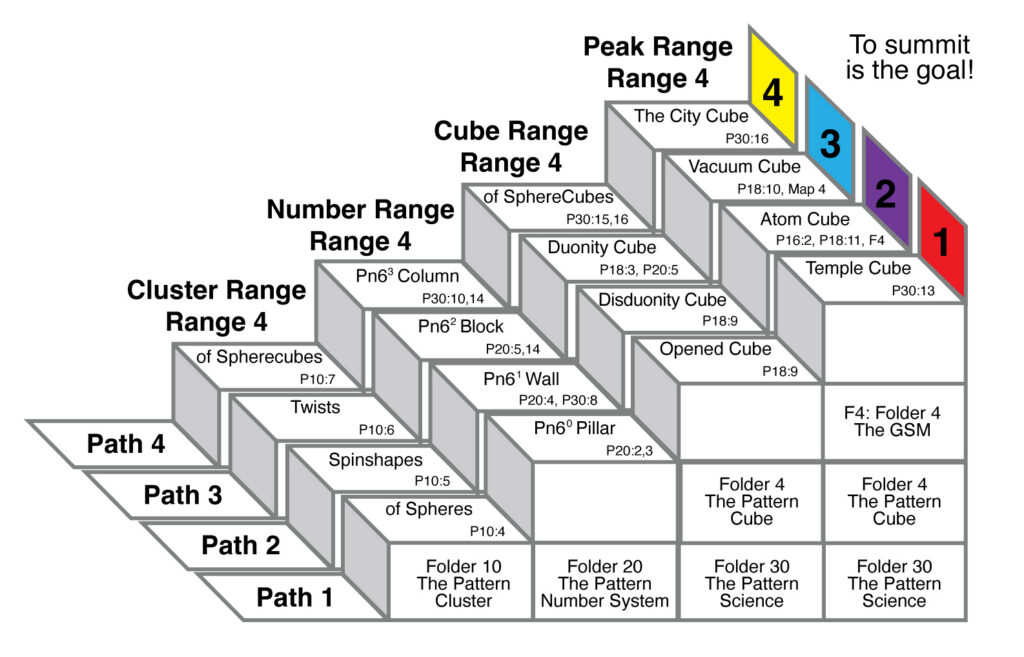
The Pattern Mountain consists of model massifs arranged in a grid that ascends step by step – through the ranges – from the mountain’s approach to its summit. Four coloured routes lead to the four peaks. The summit massifs are the Temple Cube, the Atom Cube, the Vacuum Cube, and the City Cube.
The Pattern Playscience Book
The Pattern Playscience is a printable book version of this website and the Pattern Science website. It is meant for expedition teams preparing for the challenge.
Use the contact form to order.
Climbing Expeditions
Guided by Peter the Leader, climbing teams set out to conquer the mountain’s models on their way to the summit.
The Pattern Science Centre – The Playscience Place
– Plans and promotes the Pattern Mountain Challenge.
– Organizes expedition teams to climb to the four peaks of the mountain.
– Tracks team progress and performance throughout expeditions.
– Designs AI-type customized Pattern Mountain expeditions.
The Centre is an initiative of The Pattern Science Association.
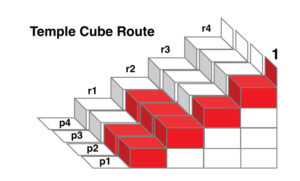
Expedition Routes
Each summit peak of the Pattern Mountain is reached by a specific route that extends across the mountain’s four ranges. Each massif along the route is scaled in four steps, with its top serving as a resting or camping point. Massifs are identified by their mountain coordinates. For example, the Temple Cube massif on the left is located at r4p1 (Range 4, Path 1). The complete set of massif coordinates defines the expedition route.
THE PATTERN SCIENCE CACHE
The Presentation, Folders 10, 18, 20, 30, and the Index, that describes the Pattern Science with its various models, are available on the website thepatternscience.com. Other relevant Pattern folders and documents are available on the website thepatternbook.com.
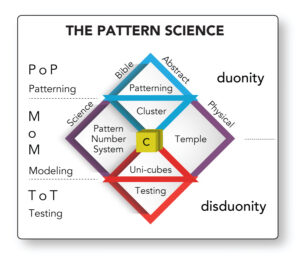
The Pattern Science Diamond (above) illustrates the three-tier method of the Pattern Science. Divided into distinct layers, it reveals both scope and composition: beginning with the Principle of Patterning at the top, continuing through the Method of Modeling in the middle, and culminating in the Truth of Testing at the bottom.
The Presentation & The Index
The Pattern Science Presentation
The Pattern Science Index
Folder 10 & 18
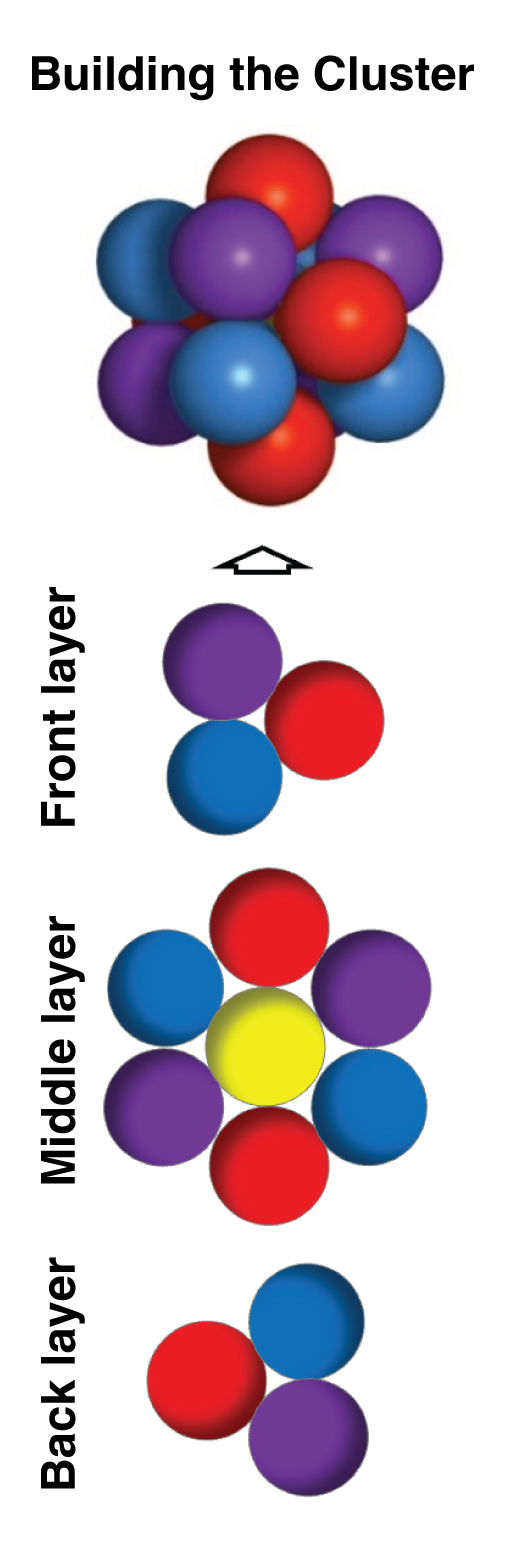
Folder 10 The Pattern Cluster
Folder 18 The Pattern Cube
Folder 20 & 30
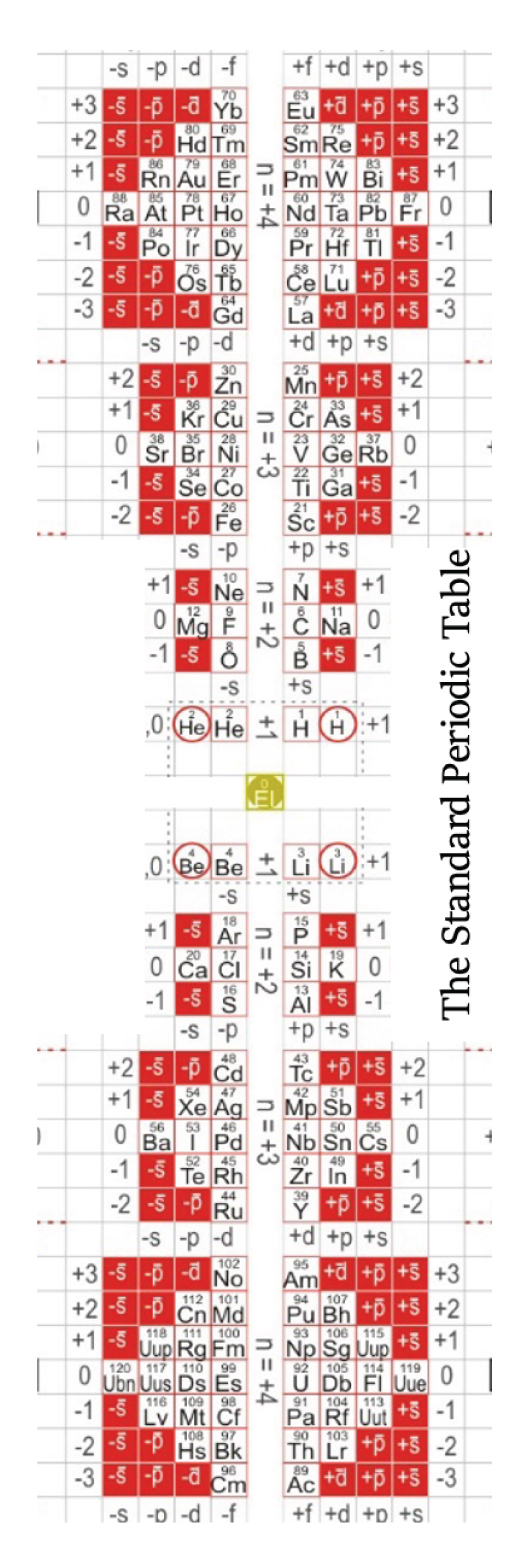
Folder 20 The Pattern Number System, and Interpretation
Folder 30 The Pattern Science
The Centre Podcast & The Science Podcast
The Pattern Centre Podcast
MPEG-4 Audio
The Pattern Science Podcast
MPEG-4 Audio
Links available on request
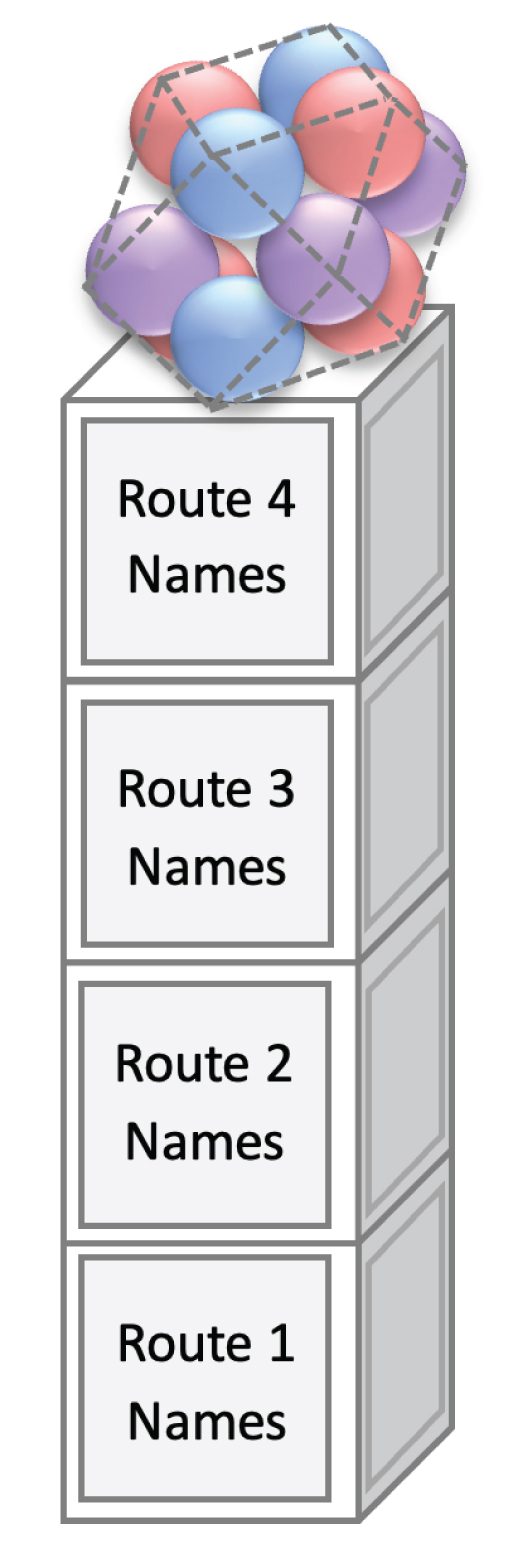
The Pattern Playscience: A printable workbook – available on thepatternbook.com – can be used by teams for preparation and route research.
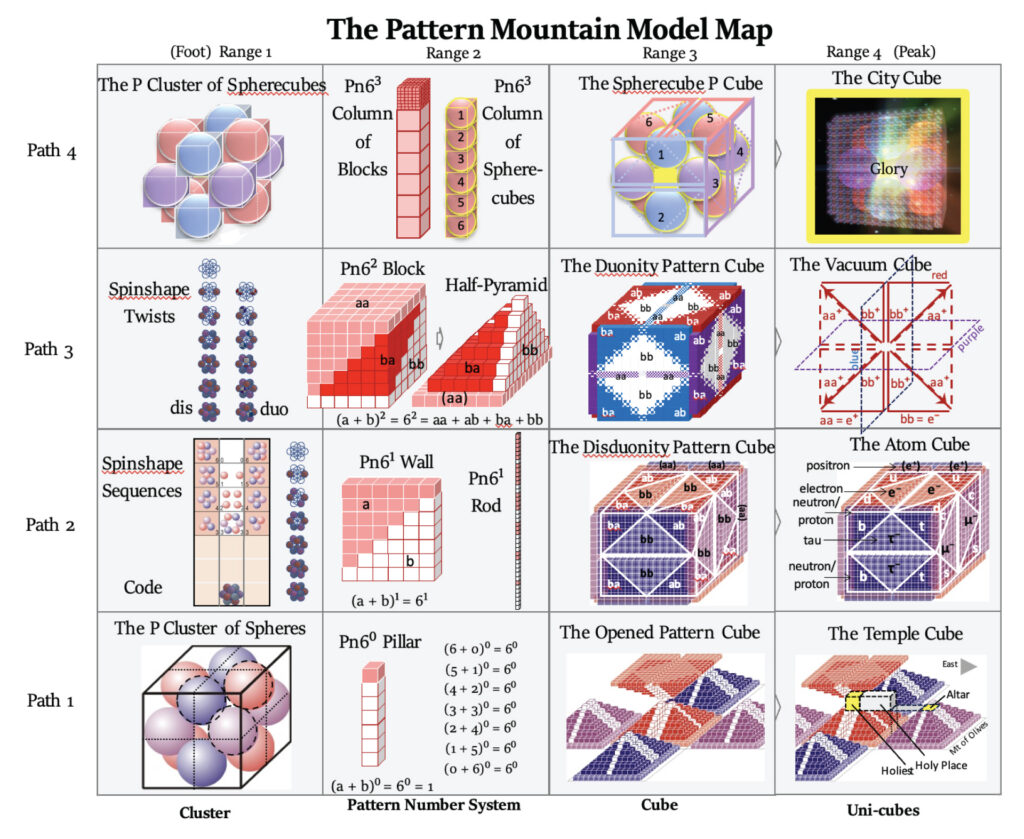
The workbook is designed to map the models described in the Resource documents onto the Pattern Mountain Model Map.
In addition, route card templates are available to support structured exploration and documentation of each climb.
THE PATTERN SCIENCE GRID
Playscience is Serious Science.
The Pattern Science Grid is based on the Pattern Science Method, which is illustrated by the Pattern Science Diamond.
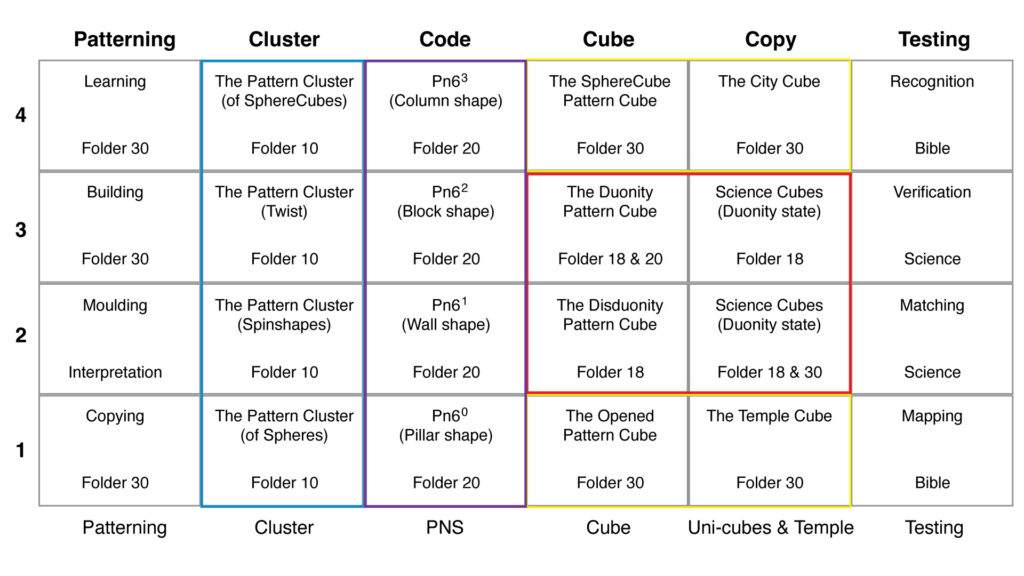
The grid contains six columns, each corresponding to one of the modules in the diamond framework. Every column consists of four models of the same type. For example, the Opened Pattern Cube is the model located in the third column at level 1. This model is described primarily in Folder 30. The folder referenced alongside a model serves as its primary resource, though the same model may also be discussed in other folders. Folder 30 covers most of the models in the grid.
The column names at the bottom of the grid correspond directly to the modules of the Pattern Science Diamond. It should be noted that the Testing column has no folder references; instead, it requires extensive biblical and scientific knowledge.
THE PATTERN MOUNTAIN
The Pattern Mountain is composed of models known as massifs. Arranged in ascending ranges, these massifs are selected from the models from the Pattern Science Grid. Different selections of models can be made, allowing for alternative versions of the mountain to be constructed.
The Models of the Mountain
The names of the models are indicated on each massif. The associated page numbers refer to descriptions of the models at the page level of the Resource documents.
The broader context of each model – at the folder level – is provided in the Pattern Science Grid.
Each model is scaled in four steps, representing its geometrical build-up. Not all steps are required for every route; some routes demand fewer steps to scale a massif.
The Mountain Coordinates
Massifs are identified by coordinates formed by the paths and ranges of the mountain.
For example, the Pn6⁰ Pillar massif is located at r2p1 (Range 2, Path 1).
Paths generally represent a progression from simpler to more complex models, while ranges indicate a progression from simpler to more complex models of the same type.
The Four Peak Models
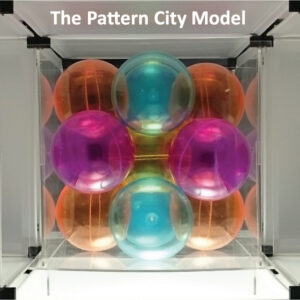
The peak range consists of four summit massifs. The Temple Cube represent the biblical type structure; the Atom Cube embodies a geometric version of the Standard Model of Elementary Particles; the Vacuum Cube reflects the vacuum energy that creates particles; and the City Cube symbolizes the New City described in Revelation.
THE PATTERN MOUNTAIN MODEL MAP
THE PATTERN MOUNTAIN CHALLENGE
Master the models by building them with bricks and balls!
The Pattern Science Centre emphasizes playscience as the method through which the Lego-like Pattern Science models are learned. The Pattern Mountain of models embodies this playful approach to learning, with expedition teams “climbing the mountain” during the Challenge.
Route 1: The Temple Cube Route
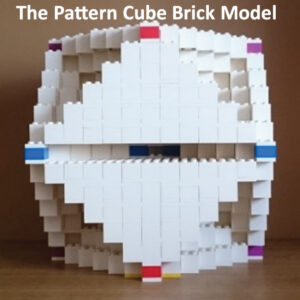
The destination of this route is the Temple Cube at the summit. The features of the opened Pattern cube correspond to the Bible’s topographical descriptions of the tabernacle, the temple, and the city of Jerusalem.
The route passes through the easiest model massifs in the four ranges of the mountain. The coordinates of these massifs are r1p1, r1p2, r2p1, r2p2, r2p3/2, r3p1, r4p1. Note that only level 2 of massif r2p3 must be climbed.
Route 1 is the easiest and most accessible of the four routes, and it must be completed first.
Route 2: The Atom Cube Route
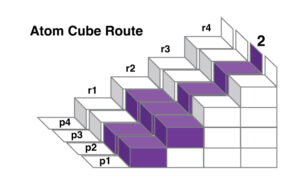
The destination of this route is the Atom Cube at the summit. The features of the disduonity Pattern cube form a geometric fit that corresponds to the particles of the Standard Model of Elementary Particles. The Atom Cube – also called the Standard Cube, – places scientific and biblical models on equal footing, since the same basic route (models) leads to both peaks. The route follows roughly the same massifs as Route 1, but diverges from Range 3 onwards.
The coordinates of the massifs are r1p1, r1p2, r2p1, r2p2, r2p3/2, r3p2, r4p2.
Route 3: The Vacuum Cube Route
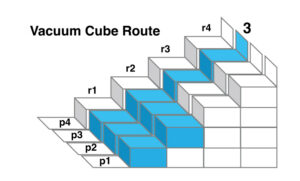
The destination of this route is the third peak at the summit. This cube reflects the properties of the quantum vacuum, where particles are created by a process known as quantum fluctuations. This peak massif is notable for its creating capabilities and demonstrating the explanatory power of the duonity version of the Pattern Cube.
The coordinates of the route’s massifs are r1p1, r1p2, r1p3, r2p1, r2p2, r2p3, r3p3, r4p3.
Route 4: The City Cube Route
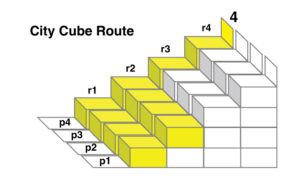
Conquering this sublime City Cube at the summit of the mountain represents the greatest achievement of the Pattern Science challenge. The Wisdom and Beauty of this duonity City – with its immense sphere gates and magnificent wall – dramatically affirm the Pattern hypothesis.
The coordinates of the route’s massifs are r1p1, r1p2, r1p3, r1p4, r2p1, r2p2, r2p3, r2p4, r3p3, r3p4, r4p4.
This route is the most demanding of the four, yet also the most rewarding, as it reveals how the origin’s cluster of spheres at r1p1 manifests inside the ultimate cube at the summit (r4p4), illustrating the Glory in the City.